DEVICE/BROWSER INFO
aatventure

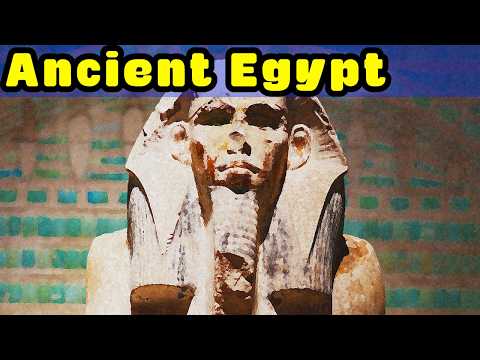
Joann explores the peak of ancient Egyptian civilisation by looking at the Colossi of Memnon, two massive stone statues depicting Pharaoh Amenhotep III, and examining the lives of the workers and artisans involved in the building of the Valley of the Kings.
This golden age was threatened by the growing power of Karnak's priests, and Joann reveals how Tutankhamen's early death was a chance for Egypt to start afresh and rewrite history, but was undermined by decades of state-sanctioned looting of the tombs.
Amenhotep III ("Amun is Satisfied"), also known as Amenhotep the Magnificent or Amenhotep the Great, was the ninth pharaoh of the Eighteenth Dynasty. According to different authors, he ruled Egypt from June 1388 to 1349 BC, after his father Thutmose IV died. Amenhotep was Thutmose's son by a minor wife, Mutemwiya.
His reign was a period of unprecedented prosperity and splendour, when Egypt reached the peak of its artistic and international power. When he died in the 38th or 39th year of his reign he was succeeded by his son Amenhotep IV, who later changed his name to Akhenaten.
Amenhotep was the son of Thutmose IV and his minor wife Mutemwiya. He was born probably around 1401 BC. Later in his life, Amenhotep commissioned the depiction of his divine birth to be displayed at Luxor Temple. Amenhotep claimed that his true father was the god Amun, who had taken the form of Thutmose IV to father a child with Mutemwiya.
Who Do You Want To Be Today?
 Incognito
 Myself
 Seller
 Showoff
 Batman
 Superman
 Spider Man
 James Bond
 Einstein
 Donald Trump
 Elon Musk
 Jeff Bezos
 Plaza Exotica
 Pizzeria
 Sushi Resto
 Slagerij
Log In



 The Diary of a CEO
1 week ago
The Diary of a CEO
1 week ago

 Ancient Architects
2 weeks ago
Ancient Architects
2 weeks ago
 Ancient Architects
2 weeks ago
Ancient Architects
2 weeks ago

 Bright Insight
1 month ago
Bright Insight
1 month ago
 Ancient Architects
1 month ago
Ancient Architects
1 month ago
 Ancient Architects
1 month ago
Ancient Architects
1 month ago
 Ancient Architects
1 month ago
Ancient Architects
1 month ago
 Bright Insight
1 month ago
Bright Insight
1 month ago

 Documentary Base
1 month ago
Documentary Base
1 month ago
 Ancient Architects
2 months ago
Ancient Architects
2 months ago
 Ancient Architects
2 months ago
Ancient Architects
2 months ago

 Slice
2 months ago
Slice
2 months ago

 Infographics
2 months ago
Infographics
2 months ago
 Ancient Architects
2 months ago
Ancient Architects
2 months ago
 Ancient Architects
3 months ago
Ancient Architects
3 months ago
 Ancient Architects
3 months ago
Ancient Architects
3 months ago
 Ancient Architects
3 months ago
Ancient Architects
3 months ago

 History With Cy
3 months ago
History With Cy
3 months ago

 National Geographic
3 months ago
National Geographic
3 months ago

 Unexplained Mysteries
4 months ago
Unexplained Mysteries
4 months ago
 Ancient Architects
4 months ago
Ancient Architects
4 months ago
 Documentary Base
4 months ago
Documentary Base
4 months ago
 Ancient Architects
4 months ago
Ancient Architects
4 months ago
 Ancient Architects
4 months ago
Ancient Architects
4 months ago