DEVICE/BROWSER INFO
aatventure
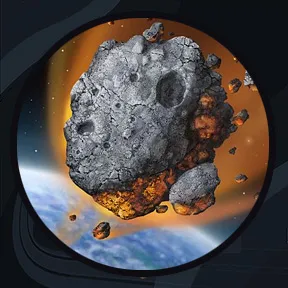
Could the ingredients for life have arrived on asteroids? Neil deGrasse Tyson and comic co-host Chuck Nice unpack what the sample collected from asteroid Bennu is teaching us about the origins of life itself with Harold Connolly, geologist and mission scientist for OSIRIS-REx.
How do you pick which asteroid to collect samples from? We discuss the selection of Bennu and how the context of the rock is important, not just the chemical makeup. What's the difference between a metallic asteroid and a carbonaceous one? Why is Bennu a rubble pile, and why did that make the mission so unpredictable?
They break down the touch-and-go mechanics of the sample return, including the moment the spacecraft sank 48 centimeters into Bennu's shockingly soft surface and the scramble to stow the sample before stones caught in the valve cost them everything.
Harold walks through the identification of evaporite minerals and the detection of all 15 amino acids and what they mean. How does Japan's Hayabusa2 sample from asteroid Ryugu compare? What can dust that predates our own solar system tell us about where we came from? And what is the role of phosphorus in assembling the prebiotic compounds that bridge the gap between chemistry and life?
The conversation expands outward to Mars, where minerals like gypsum and vivianite hint at ancient flowing water, and inclusions that some scientists argue point to microbial life.
Are those claims convincing? Could lithopanspermia actually work? If the same amino acid ingredients exist in space and on Earth, why invoke panspermia at all? Learn about Earth’s molten past and how the ingredients for life got here.
We discuss what it takes to get from prebiotic compounds to actual life, why the universe doesn't care how we've divided our sciences, and why geologists, astronomers, and biologists are going to have to keep holding hands to find the answer.
Oh, and Bennu has a small but real chance of hitting Earth in 2182. Plenty of time to prepare. Keep Looking Up!
Who Do You Want To Be Today?
 Incognito
 Myself
 Seller
 Showoff
 Batman
 Superman
 Spider Man
 James Bond
 Einstein
 Donald Trump
 Elon Musk
 Jeff Bezos
 Plaza Exotica
 Pizzeria
 Sushi Resto
 Slagerij
Log In



 Sabine Hossenfelder
1 month ago
Sabine Hossenfelder
1 month ago
 The Space Race
3 months ago
The Space Race
3 months ago


 Melodysheep
2 years ago
Melodysheep
2 years ago




 Simon Whistler
6 years ago
Simon Whistler
6 years ago