DEVICE/BROWSER INFO
aatventure

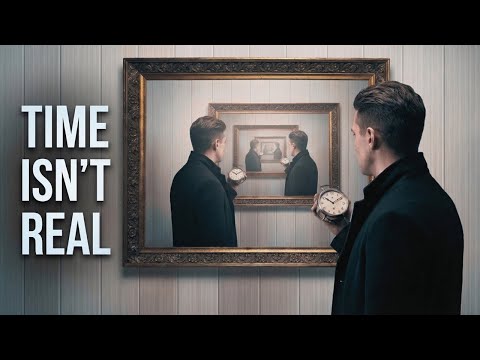
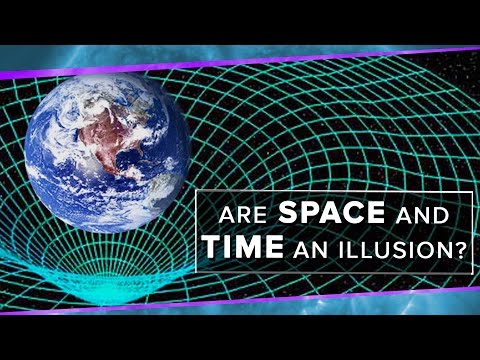
It's one of the deepest questions in science: What is time, and why does it seem to flow in only one direction? While everyday experience suggests that time moves relentlessly from past to future, modern physics paints a far stranger picture.
Our perception of time may be misleading. Using the analogy of a DVD movie, the video introduces the concept of the Block Universe, an interpretation of Einstein’s relativity in which past, present, and future all coexist within a four-dimensional spacetime structure.
In this view, the universe is not continuously unfolding. Instead, every event that has happened or will happen already exists as part of spacetime.
We experience life one moment at a time because our consciousness moves through these moments, much like watching a movie frame by frame.
The video explains that the fundamental laws of physics are largely time-symmetric. Most equations work equally well whether time runs forward or backward. This raises a profound question: if physics itself does not prefer a direction of time, where does the arrow of time come from?
The answer appears to lie in entropy, the measure of disorder described by the Second Law of Thermodynamics. Entropy tends to increase over time, creating a distinction between past and future. A broken egg naturally becomes scrambled, but scrambled eggs do not spontaneously reassemble. This statistical tendency gives rise to the arrow of time and explains why we remember the past rather than the future.
The video then explores Einstein’s revolutionary discovery that time is not absolute.
Through special relativity, time can slow down for objects moving at high speeds. Through general relativity, gravity can also slow the passage of time. Experiments involving atomic clocks, satellites, and GPS systems have repeatedly confirmed these predictions.
Time therefore depends on motion and gravity rather than flowing identically for everyone.
From there, the discussion turns to the possibility of time travel. Traveling into the future is already possible in principle through time dilation, though only by small amounts with current technology. Traveling into the past is much more problematic. General relativity allows mathematical solutions involving wormholes, hypothetical tunnels connecting distant regions of spacetime. If one end of a wormhole experienced time differently from the other, it could potentially function as a time machine.
However, enormous obstacles remain. No wormholes have been observed, and keeping one open would likely require exotic forms of matter with negative energy density. While phenomena such as the Casimir effect hint that negative energy can exist, the amounts required for a traversable wormhole are far beyond anything currently known.
The video concludes by emphasizing that despite remarkable advances in physics, a central mystery remains unresolved: Why did the universe begin in an extraordinarily low-entropy state? Until that question is answered, the true nature of time—and why it appears to flow forward—may remain one of the greatest unsolved problems in modern physics.
Who Do You Want To Be Today?
 Incognito
 Myself
 Seller
 Showoff
 Batman
 Superman
 Spider Man
 James Bond
 Einstein
 Donald Trump
 Elon Musk
 Jeff Bezos
 Plaza Exotica
 Pizzeria
 Sushi Resto
 Slagerij
Log In


 Lex Fridman
3 weeks ago
Lex Fridman
3 weeks ago



 Sabine Hossenfelder
3 months ago
Sabine Hossenfelder
3 months ago
 Sabine Hossenfelder
4 months ago
Sabine Hossenfelder
4 months ago


 Sabine Hossenfelder
1 year ago
Sabine Hossenfelder
1 year ago


 Infographics
4 years ago
Infographics
4 years ago




 National Geographic
9 years ago
National Geographic
9 years ago
 PBS Space Time
11 years ago
PBS Space Time
11 years ago